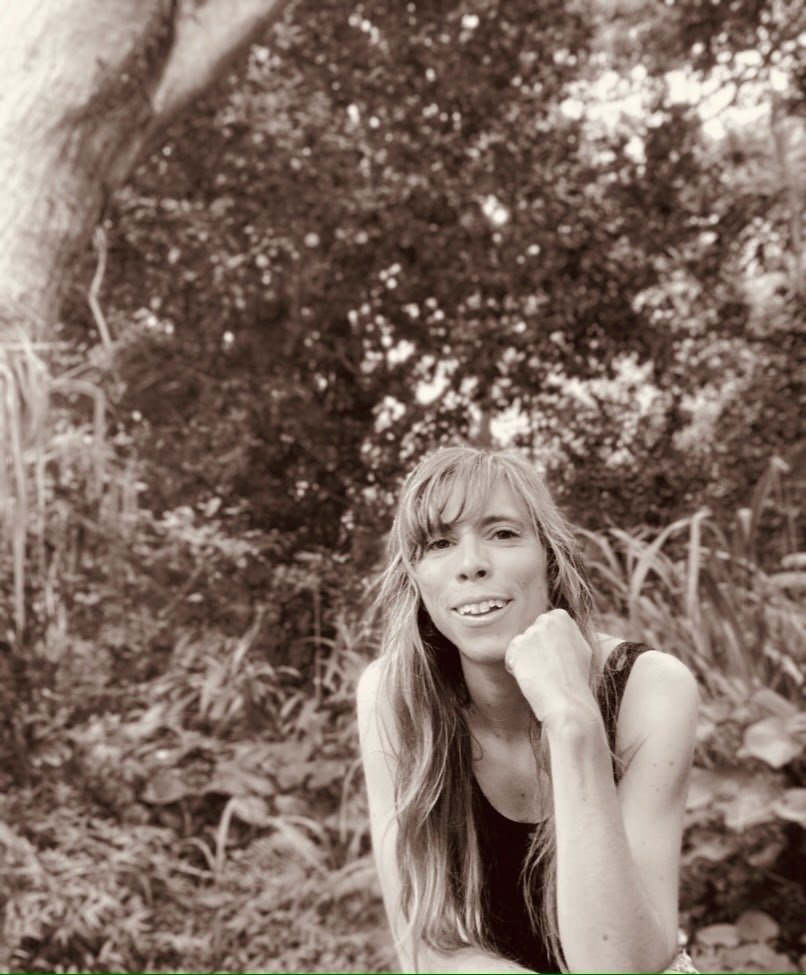
real actual hilary
Friday, May 17, 2013
Tuesday, May 14, 2013
parents of writers: a memo
Dear Parents of Writers (POW),
The summer book season will soon be in full swing. As
several of you have writer-children with novels coming out in the next few
weeks, the members of the board would like to take this opportunity to remind
you of certain guidelines for interacting with your offspring during this
sensitive time. If you have any questions or concerns, a registered POW
counselor is available by telephone 24/7 at 1-888-POW-HELP to assist you.
Avoid sending
your writer-child e-mail alerts with subject headings like "VegasBabe22
panned your book on Amazon." Although VegasBabe's comments might strike
you as a serious affront requiring urgent action, your writer-child may take a
more pacifist stance on the matter. Because your writer-child may not, in fact,
take each and every internet review as seriously as you do—and indeed, may be
avoiding them completely—it is important to inquire about her policy on this
matter before filling her inbox with well-meaning updates every time an
ignominious villain says something less-than-laudatory about her book.
Avoid asking your
writer-child about her "plans" every time you talk on the phone. Your
writer-child hasn't showered for a week; her "office" is a cardboard
box that lives in the backseat of her boyfriend's car. Her "plans"
involve acquiring a decent pair of socks in time for ALA, and possibly moving
to this secret jungle camp in Hawaii that a cool stranger in whose backyard she
recently camped told her about.
Avoid marching
into tourist bookstores while you are on vacation, asking to be directed to
your writer-child's book, and sending your writer-child alarmist e-mails when
it is not in stock. Not every bookstore will stock your writer-child's book,
especially the ones that sell mostly seagull magnets and coffee table books
about sand dollars. Do not be surprised if your writer-child shows a
bewildering lack of alarm about this state of affairs. Writer-children do not
always appreciate the scope of these indignities; that is where you come in.
Avoid asking your
writer-child if she has talked to her editor about publishing that
barely-fictionalized travel novella she wrote at nineteen or the picture book
she wrote and illustrated at age ten. Although the commerical potential of your
writer-child's juvenalia may seem obvious to you, your writer-child will find
all sorts of wily excuses not to pass them on to her agent and editor. You may
wish to send said juvenalia to movie producers yourself, because otherwise
there is no way you will ever see the genius that is Iggy The Iguana brought to life on the big screen.
Avoid asking your writer-child about her
second novel unless you have first checked with her significant other to
confirm that this is a Good Writing Day. If you receive an indication that this
is a Bad Writing Day, wait twenty-four hours and check again.
Do listen
carefully when your writer-child updates you on book news, to avoid making
mistakes or exaggerations when repeating said news to extended family. A Junior
Library Guild selection is not the same as an Oprah's Book Club selection; a
Bloggy award is not the Pulitzer Prize. These differences may seem trivial to
you, but may cause your writer-child considerable embarassment at Thanksgiving
dinner.
Do seek out other
POW's for support should you experience anxiety, frustration, anger or
disappointment during any stage of your writer-child's career. It is not easy
to be the parent of a writer, but remember that you are not alone.
Please feel free to reproduce and/or distribute this
document at will, and our sincerest best wishes for this summer 2013 book
season.
Velda Perez,
Chairwoman, Parents of Writers
Thursday, May 9, 2013
the secret lives of YA cover designers: an interview with Tom Forget
Tom Forget is an artist and cover designer who was recently declared to be one of the "most stylish New Yorkers" by TimeOut magazine. He also happens to be the man behind the cover for WILD AWAKE. He kindly agreed to share his thoughts on book design and the creative life. You can see more of his work at www.tomforget.com and at www.mammalmag.com.
What do you aim for in a YA cover (as opposed to a cover for the adult market)?
That's an interesting question. I think the briefest way to answer that is that there's a certain direct-ness of imagery that we use in YA that is not as strictly observed in adult books. We are less likely to use images that are cropped or obscured than what you might see on adult covers. I think that in terms of color we try to be more immediate as well. There's certainly room for subtlety in YA design, and I think many of the best YA jackets employ it, but we have to make sure that we don't outsmart ourselves (or by extension our readers) by trying to be too sophisticated. In addition, just from a market standpoint, we're looking at different indicators. We need to pay attention to advertising, fashion, music, etc. that young people are consuming, where as that's obviously less crucial for adult designers.
What are the differences between designing for a hardcover or a paperback?
Honestly, there is not much of a difference for me, aside from the fact that you're not really thinking about extending any art onto flaps. You basically have to plan for "front, back, spine," which might limit your ideas slightly.
What are your biggest frustrations as a cover designer?
That's an easy one. The approval process. I can only speak to my own experiences, but in my daily working life there are many "customers" to satisfy, and frequently they've got wildly different expectations. Editors and Authors might have a strong creative vision, but then the sales force and the bookseller will have commercial needs that have to be met. The designer has to walk a tightrope to get to the other side, while still on some level liking what they've created and finding some creative satisfaction from the end result. One specific thing relates to this is that in our market there is a tendency to follow in the footsteps of established successful jackets. Obviously, trend-spotting is important, but it can be exasperating when you are consistently asked to "make it look like (current successful jacket)". As designers, we crave new stimulus, so this can run current to our natural impulses.
What would be your dream book for which to design a cover?
My dream project would be a line-wide redesign of crime writer Lawrence Block's Matthew Scudder books. That's one of my favorite series and it's really the kind of material I gravitate towards in my leisure hours. The books are currently packaged in a perfectly serviceable mass market design, but they're so morally compelling and gritty that I would really like to see something more attention-grabbing. The Lookout director Scott Frank is currently working on a film based on one of the books, starring Liam Neeson, so maybe a repackage is in the pipeline? One of my colleagues on the 6th floor will no doubt get the call, sadly.
Are you involved in creative projects outside of cover design? Do they influence your cover aesthetic, or do you keep them separated?
Yes, absolutely. In my off hours I Paint and draw and have a small publication I work on with a group of old friends called MAMMAL Magazine, where I put any sort of odd idea I've been sketching out in the world. Lately I've been collaborating on skateboard deck designs for Handsome Skateboards, which is a small new brand founded by a talented sculptor friend of mine, Eric Eley. In my house, my wife and I are always working on something and bouncing ideas off of each other. She wrote a novel manuscript that she's shopping to agents, so she's sympathetic to my creative efforts too. We try to maintain an atmosphere where we can help each other over the humps we might struggle with.
As far as my pursuits influencing my cover aesthetic, they certainly do, and vice versa! Actually, WILD AWAKE is a prime example of my leisure activities and my "day job" meeting up. For the flaps and back cover, I hand-painted the background treatments and drew flowers, as well as splattering ink on paper to make some of the other elements. It was a convergence of a number of different techniques that I don't often get to use at Harper. I also find myself referring back to compositional rules I learn at work when I'm creating my own off-hours stuff. Creativity isn't a one way street so much as it's different bodies of water that really just make up one big ocean.
How did you arrive at this cover for WILD AWAKE?
This one took a little while. Some books are very easy to get a handle on (Vampire boy falls in love with human girl!), but the emotions in WILD AWAKE were more complicated than that. We needed to somehow show joy and deep sadness while being respectful to the darker aspects of the story. Because the girl in the story had an artist older sister, I started doing alot of stuff with actual, old-fashioned, handmade paints and inks, while simultaneously doing some stock photo research to see if anything clicked. Editorial provided us with some helpful competitive titles and jackets that both they and the author (in this instance you!) liked the feel of, and I tried to tailor what I was doing based on that information. In the meantime, there was discussion about the title, and when that changed it afforded us more room to play with the visual space. After a couple of "not...quite...right..." comps, we had a tremendously helpful conference call where all of the involved parties were able to communicate really directly. This is not usual procedure, but in this instance it was really clarifying and pretty much lead directly to us finding the correct tone for the final cover. And really, a lot of the earlier drawings and paint work from earlier comps went into crafting the back cover and flaps, so the whole process from the very beginning bore fruit.
What advice do you have for aspiring book designers?
More than anything, I would say that you have to be ready to throw something out and start again! In modern book publishing, there are many layers of approval that you have to go through (art directors, sales team, editorial, author, bookseller), and you have to be ready to just roll with it if the cover you just worked on and have fallen in love with needs to be reconsidered. It's easier said than done when you've come up with a design you're really fond of but that just isn't quite right for the book in question, but you can always make that rejected cover part of your portfolio (as I did for one of the rejected covers for WILD AWAKE!)
I would also say that an aspiring book designer should always keep his or her eyes open. I of course try to keep abreast of the books on the shelves in the YA section of bookstores, but inspiration strikes when I look at the greater world around me. For example, the color scheme and flap design for WILD AWAKE was something I thought up from looking at Mark Rothko color field paintings when I was at the Museum of Modern Art. One other time, I got a great idea for a color scheme for a design from looking at really gnarly bread mold. If you peer too intently at other book designs exclusively, it'll be nearly impossible for you to design something fresh. It's the equivalent of trying to pick something up with a clenched fist.
Tom Forget's cover for WILD AWAKE: hand-made paint splatters and Rothko-inspired colors.
*
Do you have any burning cover design questions for Tom? If so, please leave them in the comments and I will ask him very nicely for a guaranteed-to-be-stylish response!
Tuesday, May 7, 2013
book deals and the nomadic author: letter from shaw island
Dear you,
It is May, and WILD AWAKE is coming out in three weeks.
Techie Boyfriend and I have repaired to a campsite in the woods, which is
possibly the world's least convenient place from which to launch a novel, but
illuminating in its own way.
As I write this, my body is here in this driftwood shack,
with a kerosene lantern burning over my shoulder and Techie Boyfriend playing a
broken accordion in the twilight, but I'm aware of this other Hilary, a
Monopoly-piece extension of myself, moving around the game board of publishing
with all of the tumultuous joys and stresses that entails (one roll lands the
coveted "You have won $10 in a beauty pageant," and on the next roll
it's "Postage fees for over-ambitious ARC mailing; pay $50 to Community
Chest.")
I feel a strange tension between those two realities—the one
in which I'm a forest creature living a three-mile bike ride from the nearest
electrical outlet, and the one in which I'm a person with a blog, a twitter
account, and a calendar slowly but surely filling up with Real Actual Author
Events in places like Chicago and Boston. Both realities excite me, and
balancing the two is going to be an interesting dance. I'm especially grateful
to have known many of you, oh readers of this blog, for a pretty long time
now—I feel like I can write you these strange little letters and you will
understand.
I am typing up this letter on my laptop, sitting at that
three-mile electrical outlet in the shade. This morning I found a bird's nest
with four tiny speckled eggs inside, and saw calypso orchids growing on the forest floor. I'm glad to live in a world where both are possible, the
electrical outlet and the four speckled eggs. And although I still get worried
sometimes that I'll never find the right balance between my publishing life and
my forest one, I think there's something to be learned from watching your
Monopoly piece by kerosene lantern.
Sincerely,
Hilary
Thursday, May 2, 2013
thought of the day...
"Turtles rarely pass up a chance to lay in the sun on a partly submerged log. No two turtles ever lunched together with the idea of promoting anything. No turtle ever went around complaining that there is no profit in book publishing except from the subsidiary rights. Turtles do not work day and night to perfect explosive devices that wipe out Pacific islands and eventually render turtles sterile.Turtles never use the word "implementation" or the phrases "hard core" and "in the last analysis." No turtle ever rang another turtle back on the phone. In the last analysis, a turtle, although lacking knowledge, knows how to live. A turtle, by its admirable habits, gets to the hard core of life. That may be why its arteries are so soft."
-E.B. White, Turtle Blood Bank, 1953
Wishing you all a turtle-y day.
H
Thursday, April 25, 2013
WILD AWAKE news with a side of snurkleberry jam
Why hello!
I haven't shared much book news here, but lots of happy little things have been happening and it was time to give them a mention:
In Germany news:
WILD WACH verkauft Fischer Verlag in einer sehr schönen Deal—which is exciting, because now my German translator, Jenny, e-mails me every few days with queries like "on p. 22, what exactly are they smoking?" and "cannot find German word for 'snurkleberries,' please advise."
Fischer Verlage is an independent literary publisher that was founded in Berlin in 1886 by this dapper gentleman:
Note that he is smoking something (but what?) and has a pocket full of snurkleberries.
In Audio news:
The clever and talented Shannon McManus, whom you may remember from the audiobook of LOLA AND THE BOY NEXT DOOR, will be narrating the audio version of WILD AWAKE. This is a picture I stole from her website:
I haven't shared much book news here, but lots of happy little things have been happening and it was time to give them a mention:
In Germany news:
WILD WACH verkauft Fischer Verlag in einer sehr schönen Deal—which is exciting, because now my German translator, Jenny, e-mails me every few days with queries like "on p. 22, what exactly are they smoking?" and "cannot find German word for 'snurkleberries,' please advise."
Fischer Verlage is an independent literary publisher that was founded in Berlin in 1886 by this dapper gentleman:
Note that he is smoking something (but what?) and has a pocket full of snurkleberries.
In Audio news:
The clever and talented Shannon McManus, whom you may remember from the audiobook of LOLA AND THE BOY NEXT DOOR, will be narrating the audio version of WILD AWAKE. This is a picture I stole from her website:
That expression? Surprise and delight upon tasting a true snurkleberry for the first time.
In news concerning Junior Librarians*:
WILD AWAKE is a Junior Library Guild selection for 2013. What does this mean? I'm still not entirely sure, but they gave me this shiny thing:
*the Junior Library Guild does not actually consist of Junior Librarians, but wouldn't that be neat?In
In let's-hang-out news:
I will be at the 2013 ALA conference in Chicago this June 27-July 2nd, and possibly doing some other bookish things in Chicago that week. We should hang out!
In other news:
A few weeks ago when I visited HarperCollins, I was startled to see stacks and stacks of ARCs which have since made their way into the world. Result: a million billion* people are now reading WILD AWAKE.
*this is an exact figure.
If you are also reading WILD AWAKE, send me a picture or post it to this Tumblr. Bonus points for intriguing locations, exotic animals, and extremely dour and/or blissful facial expressions.
In where-the-heck-are-you news:
Washington! For now!
*
That is all!
Tuesday, April 23, 2013
snooping around in the forest: a writer's guide to mushroom hunting
Now that WILD AWAKE is coming out soonish, I have started to
get interview questions like “What is your advice for aspiring writers?”
At first I was saying things like “carry a notebook, blah
blah blah” but today I went for a walk in the woods on Bainbridge Island and I
realized that my best advice for aspiring writers is to take up mushroom hunting.
Mushroom hunting involves scandal and adventure and near-death experiences and
brushes with the law, and most aspiring writers don’t get enough of that. In
case of financial strain, mushroom hunting can also double as a day job, which
can come in handy for aspiring writers too.
If you are willing to take me seriously on this matter, I
will let you in on a few keen pieces of mushroom hunting advice.
*
When you start out mushroom hunting, you may get frustrated
by advice you read in books. “Look under cottonwood trees,” says the mushroom
guide, and you think, “WTF is a cottonwood tree?” “Search north-facing slopes,”
says the guide, and you think “How am I supposed to know which way is north?”
You can crash about in the woods without this knowledge and
still find plenty of mushrooms. Chances are, you will end up knowing about
cottonwood trees and north-facing slopes just by scrambling up them. If it
happens that you have been crashing about for years and are still unable to
identify a cottonwood, consult a book.
*
I once spent six hours searching the forest floor on my
hands and knees to find a single morel on Shaw Island, WA. Conclusion:
Sometimes it takes six hours of searching on your hands and knees to find your
morel.
*
When mushroom hunting, you can occasionally find yourself
staring so hard at a certain patch of ground that you completely lose track of
your surroundings. With this in mind, it is advisable to “zoom out” every so
often and take note of what’s going on in the forest at large.
Not only does this provide a pleasant break from staring at
the ground, but it can even be useful: you might notice a patch of trees or a
slant of sunlight that will point the way to further mushrooms, or explain the
absence of mushrooms in the place you are currently searching.
*
Mushroom hunting means snooping around. A walking trail says
“Stay on me—the rest of the forest is none of your business.” Mushroom hunters
don’t believe that crap for a
second. The fallen logs are your business and the puddles are your business and
the weird slimy things are your business and the dark mossy stuff is your
business. It is both your right and your duty to inspect, interrogate, poke,
nudge, sniff, squeeze, and, when appropriate, whack things with sticks. You are
the Inspector of Autumn and the Investigator of Springtime. Let nothing be
forbidden from your inquiry.
*
If you are walking around and not seeing any mushrooms, try
changing your angle. If you have been looking down, look up. If you have been
looking on top of things, look under them. If you have been standing, crouch.
If you have been crouching, climb a tree. You can walk through the same patch
of forest fifteen different ways, and see a different kind of fungi each time.
Certain mushrooms are invisible from certain angles.
This is possibly the most essential truth of mushroom
hunting.
*
Some days yield no mushrooms
whatsoever, and all you did was get your pants muddy.
This, too, is an essential truth of
mushroom hunting.
*
Wishing you millions of morels and
billions of boletes.
Subscribe to:
Posts (Atom)


